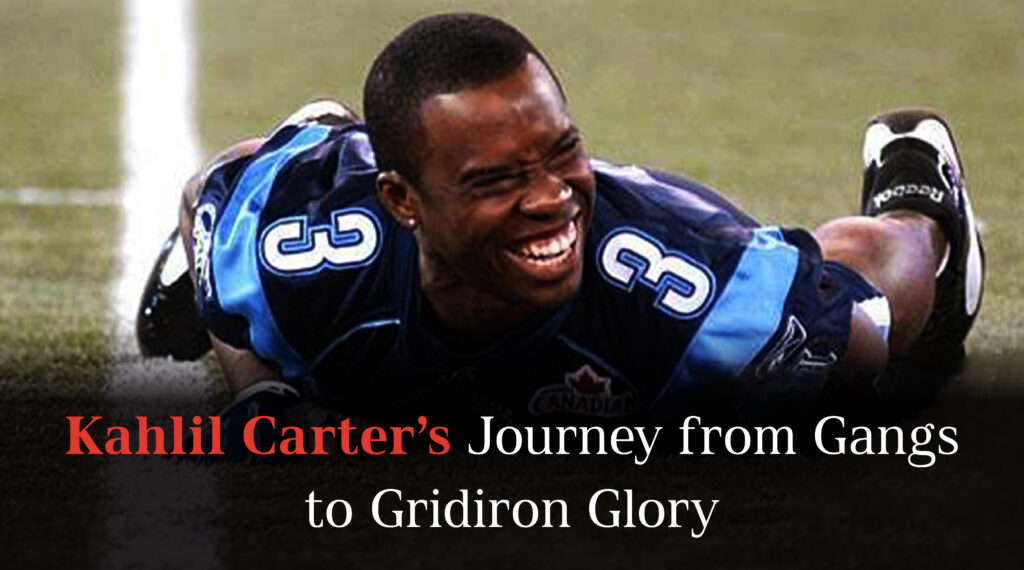
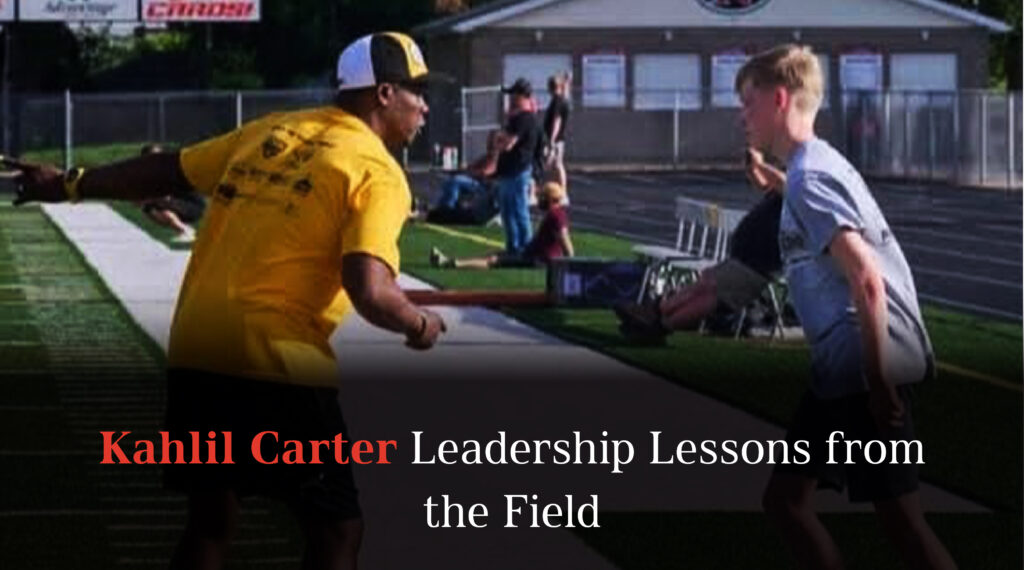
Resilience is a cornerstone of success in any endeavor, but it takes on a particularly profound significance in the high-stakes world of professional sports. For Kahlil Carter, a seasoned football coach and former professional athlete, resilience has been the driving force behind a remarkable career that spans playing fields from the NFL to the CFL and coaching sidelines across multiple leagues. His journey, detailed in his book The iN Crowd: Life, Legacy, Leadership, offers a compelling case study on how resilience can transform adversity into opportunity. This blog explores why resilience is essential for overcoming life’s challenges, drawing actionable lessons from Kahlil Carter’s experiences that resonate far beyond the gridiron.
The Foundation of Resilience
Kahlil Carter’s story begins not with triumph, but with adversity. Raised in challenging environments—from the gang-ridden streets of Little Rock, Arkansas, to the racially divided landscapes of Pine Bluff and beyond—Carter faced obstacles that could have derailed his aspirations. Growing up in a single-parent household led by his mother, Linda, Carter witnessed firsthand the socio-economic struggles of the 1970s and 1980s, including poverty, gang violence, and his mother’s battle with substance abuse. These formative years tested his resolve, yet they also laid the groundwork for the resilience that would define his future.
Carter’s early life was marked by a stark contrast between potential and peril. His older brother Aaron’s involvement in gang activities cast a shadow over the family, pulling Kahlil into an orbit of indirect affiliation. As he recounts in The iN Crowd, “If your brother happens to be a leader in a Blood gang, you’re a Blood!” This proximity to danger could have ensnared him permanently, but Carter chose a different path. His decision to prioritize football and academics over the gang lifestyle exemplifies a critical aspect of resilience: the ability to make deliberate choices in the face of overwhelming pressure. For professionals and leaders, this underscores the importance of maintaining focus on long-term goals, even when short-term circumstances threaten to pull you off course.
Turning Points
Kahlil Carter’s resilience shone brightest during pivotal moments of his football journey. One such turning point came during his time as a walk-on at the University of Arkansas. Lacking the financial security of a scholarship, Carter balanced academics, part-time jobs, and the grueling demands of Division I football. His mother’s mantra—“Focus on victory, for victory leads to heaven”—echoed in his mind, driving him to persevere where others might have faltered. This relentless determination paid off when he transitioned from a college walk-on to a professional athlete, breaking barriers as one of the first AF2 players to sign with an NFL team, the Buffalo Bills, in 2003.
Another defining moment occurred in 2000, during his rookie season with the Arkansas Twisters in the Arena Football League. On the night of a game in Greensboro, North Carolina, Carter learned of his father’s fatal car accident. Despite the emotional weight of this loss, he chose to play, delivering what he describes as the best performance of his career—200 passing yards, three touchdowns, and a multi-faceted display of athletic prowess. This night encapsulates resilience as not just enduring hardship, but thriving through it. For corporate leaders, Carter’s example illustrates the necessity of performing under pressure, transforming personal setbacks into professional fuel.
Resilience as a Professional Athlete and Coach
Kahlil Carter’s playing career—spanning the NFL, NFL Europe, AFL, and CFL—further highlights resilience’s role in sustaining success. Named to the Arena Football League’s All-Anniversary Team in 2007 and earning Defensive Player of the Year honors in 2003, Carter’s accolades reflect a career built on adaptability and grit. Injuries, such as the groin injury that derailed his NFL aspirations with the Buffalo Bills, tested his resolve. Yet, rather than succumbing to regret, he pivoted to coaching, where his resilience continued to shine.
As a coach, Carter has led teams to back-to-back championships in 2011 and 2012, appeared in multiple CFL Finals with the Calgary Stampeders, and mentored 21 All-League players over a 12-year career. His ability to adapt game plans, inspire athletes, and navigate the unpredictable nature of sports mirrors the resilience required in corporate settings. Gary Swenson, a veteran high school coach, praises Carter’s “uncommon ability to teach the game and relate to players,” noting his consistency and accountability—qualities rooted in resilience. Whether facing a losing streak or a roster overhaul, Carter’s capacity to rebound and innovate offers a blueprint for leaders managing teams through uncertainty.
Lessons from Kahlil Carter
Kahlil Carter’s journey provides several key lessons on why resilience is essential for overcoming adversity, applicable to professionals across industries:
- Embracing Adversity as a Catalyst for Growth
Carter’s early struggles with poverty and gang influence didn’t define him—they refined him. He writes, “Adversity became a tool that I might not have always fully grasped, but I used it to mold my determination.” This mindset is critical for professionals facing market downturns or organizational challenges. Resilience turns obstacles into stepping stones, fostering innovation and strength. - Prioritizing Purpose Over Circumstance
Carter’s commitment to his SWAAG philosophy—Students Working toward Academic and Athletic Greatness, Serving a Wonderful and Amazing God, and wearing confidence with style—kept him anchored. In moments of doubt, such as his regret over not supporting his mother during her move to Maryland, he leaned on faith and purpose. For leaders, this emphasizes the need to align actions with core values, ensuring stability amid chaos. - Adapting to Change with Confidence
From transitioning leagues as a player to coaching across high school, collegiate, and professional levels, Carter’s adaptability is a hallmark of his resilience. His ability to “handle and adapt to any level of football in any situation,” as Swenson notes, reflects a skillset vital in today’s fast-evolving business landscape. Resilience equips individuals to pivot without losing momentum. - Building a Legacy Through Perseverance
Carter’s mentorship of young athletes and his focus on life beyond the field demonstrate that resilience isn’t just about personal survival—it’s about uplifting others. His book’s subtitle, Life, Legacy, Leadership, encapsulates this ethos. In a corporate context, resilient leaders inspire teams, fostering a culture of endurance and excellence that outlasts individual achievements.
Applying Resilience in Today’s World
In an era of rapid technological change, economic uncertainty, and social upheaval, Kahlil Carter’s lessons are more relevant than ever. Professionals face adversity in myriad forms—tight deadlines, competitive pressures, or personal setbacks. Carter’s journey teaches that resilience isn’t a passive trait but an active strategy. It requires intentional effort: setting goals (as seen in his three-year planning approach), seeking support (from faith, family, or mentors), and maintaining accountability. For instance, Carter’s decision to step away from coaching to prioritize family in Des Moines, Iowa, reflects a resilient redefinition of success. He writes, “No amount of money can buy the time and attention I can give them.” This shift mirrors the modern professional’s need to balance ambition with well-being, ensuring long-term sustainability. Organizations, too, can learn from Carter’s emphasis on relationships over fame, cultivating resilient teams that weather challenges together.